
We spent the first four days of our Belize trip in San Ignacio, using it as a base to explore ancient Mayan ruins, photograph exotic wildlife, and experience the rhythms of a lively jungle town. It turned out to be the perfect introduction to Belize—equal parts history, adventure, and culture.
One of the highlights of our stay was an unforgettable cave tubing adventure through the Nohoch Che’en cave system, where we floated, swam, and hiked deep into a hidden underground world.
Tikal National Park
We arrived in San Ignacio after dark and set out early the next morning for Tikal, just across the border in Guatemala. We had arranged a private tour with Tikal Go—and that turned out to be a great decision.
Our driver seemed to have a knack (or perhaps connections) for bypassing lines at the border, park entrance, and just about everywhere else. The border crossing was smooth and efficient, and we made excellent time getting to the park.
Just before entering Tikal, we stopped to meet our Guatemalan guide, Nate, who proved to be knowledgeable, engaging, and fluent in both English and Spanish.
At Tikal, the wildlife was as captivating as the ruins themselves. Nate discussed wildlife in the park and showed us a video of a jaguar that snatched a coatimundi from within 3’ of a tourist.
A troop of coatis greeted us almost immediately, and along the trails we encountered howler monkeys, spider monkeys, and a variety of birds, including the brilliantly colored keel-billed toucan.
Nate demonstrated a howler monkey call that triggered a chorus of deep, echoing roars from the surrounding jungle—a sound famously used for dinosaurs in Jurassic Park. Hearing it in person, reverberating through the forest, was unforgettable.
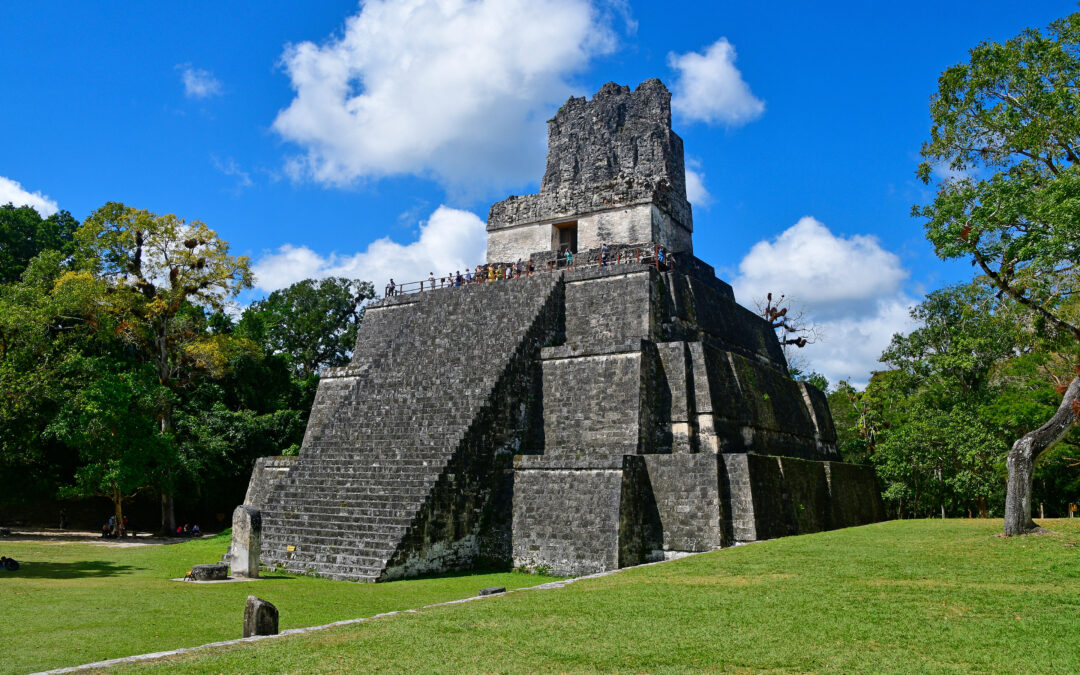
The ruins themselves are staggering. Tikal contains over 3,000 structures, many still hidden beneath the jungle canopy. The Great Plaza, framed by towering pyramids, is awe-inspiring. Climbing one of the pyramids rewards you with sweeping views of the jungle stretching endlessly in all directions.
Our guide also shared fascinating cultural details—like the fact that in certain Mayan ball games, the winners were honored by being sacrificed. If the NFL adopted that rule, recruiting might become a challenge.
Cahal Pech
Closer to our home away from home, we visited Cahal Pech, one of the oldest Mayan sites in Belize. It’s located right in San Ignacio and within walking distance of our Airbnb—though the steep, hot climb made the $5 USD taxi ride back down an easy decision.
The site includes 34 structures, with plazas, temples, and narrow passageways to explore. Climbing the main pyramid offered a great perspective on the surrounding jungle and town.
Green Iguana Conservation Project
On our way to Cahal Pech, we stopped at the Green Iguana Conservation Project, located behind the San Ignacio Resort Hotel.
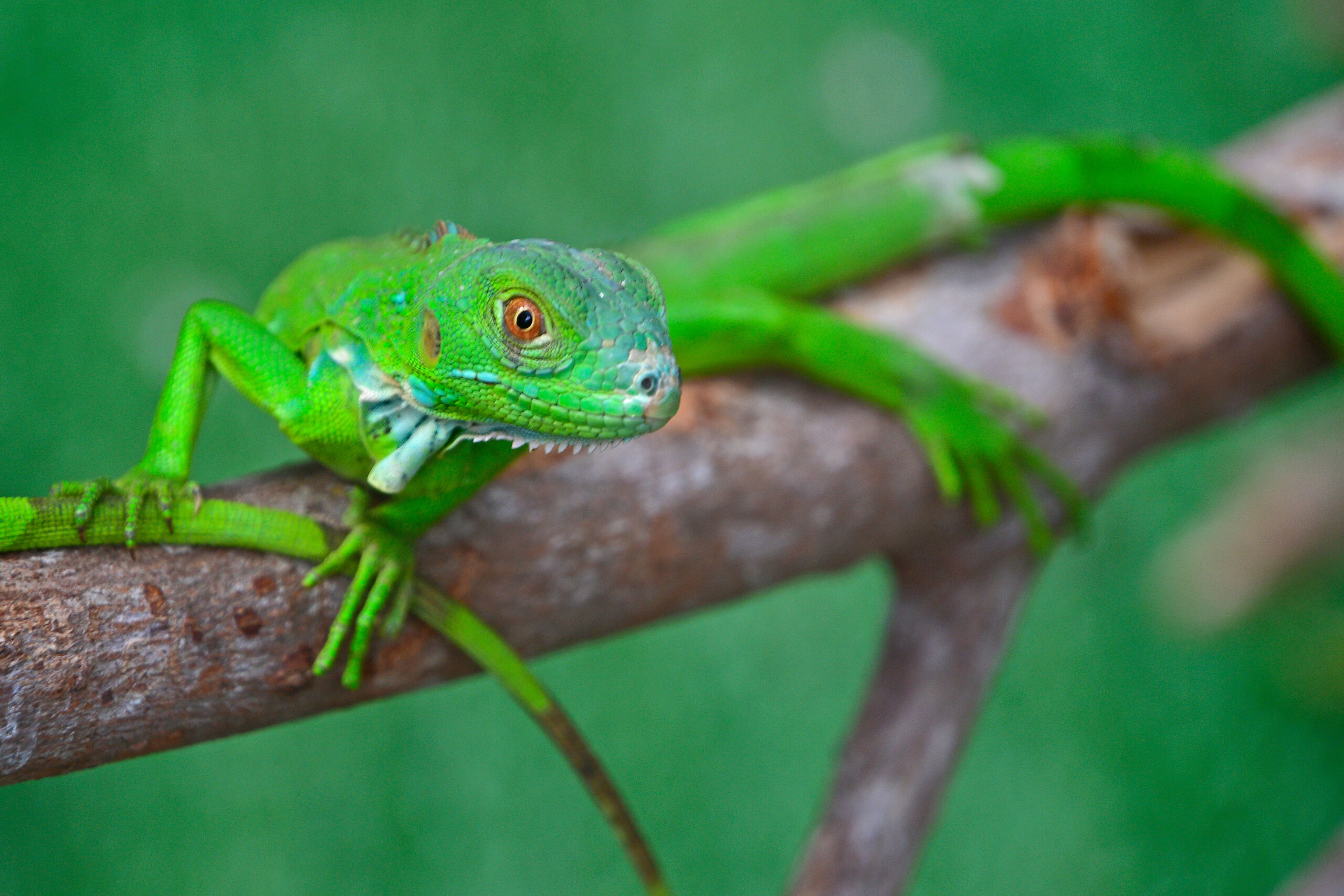
The tour was both educational and hands-on. We learned about the differences between green and black iguanas, conservation challenges in Belize, and the project’s efforts to breed and rehabilitate iguanas for release into the wild. It’s a small but worthwhile stop, especially if you enjoy wildlife encounters.
Money in Belize
A quick note on currency: the exchange rate is fixed at $1 USD = $2 Belize dollars (BZD), and U.S. dollars are widely accepted.
However, prices are sometimes quoted in BZD and sometimes in USD, so it pays to double-check. If you’re not careful, you might end up spending twice what you expected.
If you’re budget-conscious, it’s also worth shopping around and buying local when possible. We learned this the hard way at a grocery store on the islands—Belikin (Belize’s local beer) was $3.10 BZD, while a craft IPA cost $9.40. Had I known, I would have stuck with the local favorite.
The People
One of the most memorable parts of San Ignacio was the people. Nearly everyone we met was welcoming, friendly, and eager to share their knowledge.
Whenever possible, I sat near our drivers and asked questions. Through those conversations, I learned about the history of the Mayans, why English is Belize’s official language, why the capital is inland (hurricanes), and why so many homes are built on stilts.
Those elevated homes not only help with flooding but also create useful shaded space below for storage, parking, or outdoor living. It’s a simple, practical design that makes perfect sense in the tropics.
Nohoch Che’en Caves Branch Archaeological Reserve
This was one of the most memorable adventures of our entire trip.
Our group included a newlywed couple from Ontario and our guide, Carla—a small but incredibly strong local guide with St Leonards Tours, who somehow managed to tow a train of tubers down the river with ease.
The adventure began with a jungle hike, including three river crossings, before reaching the cave system. We started by swimming upstream into the first cave, then climbed into our tubes and began drifting into the darkness.
Carla led the group of linked tubes while keeping a watchful eye on the rest of us—especially me, as I fumbled with camera settings instead of paying attention.
“Mr. Curt… butts up. Watch out for the rocks.”
At first, the river seemed gentle, and I casually mentioned my whitewater kayaking experience. But I quickly realized the danger wasn’t rapids—it was the abundance of sharp rocks just below the surface. Carla’s constant guidance kept us safe.
As we drifted deeper into the cave, the sound of a waterfall echoed ahead. Naturally, I imagined us plunging over the edge. When we asked about it, Carla replied with perfect timing:
“You should have read the fine print.”
Thankfully, it was a small waterfall feeding down into the river from a side channel.
We soon reached the side passage where we climbed out of our tubes and scrambled up the calcified waterfall into a hidden chamber. From there, the adventure continued on foot—past shimmering stalactites and stalagmites—before we jumped into a pool and swam deeper into the cave.
At one point, we turned off our headlamps and experienced complete darkness and silence—something you rarely encounter in the modern world.
On the way back, we swam/squeezed through a narrow passage between rock formations, then returned to our tubes and floated back out into the jungle light.
The Market
Saturday is the main day for San Ignacio’s open-air market, though we visited on a quieter day. Even so, we found a lively mix of vendors selling fresh fruits, vegetables, meats, and handmade crafts.
The market sits beside a public deck overlooking the Macal River. From there, we crossed a bridge, wandered through a nearby park, and looped back into town via another bridge—an enjoyable and easy walk.
Conclusion
Many visitors to Belize head straight for the islands and cayes, missing out on the jungle, the ruins, and the rich culture of inland Belize.
For us, San Ignacio was one of the highlights of the trip—a place filled with adventure, history, and genuinely welcoming people. It set the tone perfectly before we continued on to the beaches and turquoise waters of Ambergris Caye and Caye Caulker.